There is something deeply unsettling about hearing an unexpected noise when you are home alone at night.
During the day, a creaking floorboard or a strange sound from another room might barely attract attention. But after dark, when the house becomes quiet, even the smallest disturbance can make your imagination run wild.
What if the sound is not coming from the building?
What if somebody else is inside?
That frightening possibility is at the heart of Never Left, a short horror film directed by Luca Zanlorenzi.
The film follows Thomas, played by Samuele Toldo, as he experiences a disturbing situation inside his own home.
With a running time of less than six minutes, the film explores one of the most recognizable fears in horror: the possibility that the place where you feel safest is not safe at all.
A Quiet Night Becomes Something Terrifying
The central situation in Never Left is immediately familiar.
Thomas is alone at home during the night.
His surroundings should offer comfort. The house is a private, familiar environment where he should be able to relax without worrying about unexpected visitors.
But something changes when he hears a disturbance upstairs.
The sound introduces a frightening possibility.
Someone, or something, may be moving around inside the building.
For Thomas, that uncertainty becomes the beginning of a disturbing experience.
The audience understands the situation almost immediately because it requires very little explanation.
Most people have experienced an unfamiliar noise at home. Sometimes the cause is harmless. Old buildings settle, wooden surfaces expand and contract, and ordinary household systems produce unexpected sounds.
But knowing those explanations does not always prevent fear.
Especially when the disturbance seems to come from a place where nobody should be.
The Fear of Being Alone at Home
One of the most effective aspects of the Never Left premise is its ordinary location.
The film does not need an abandoned hospital, a remote forest, or an ancient haunted castle to establish a frightening situation.
It begins with a house.
A home is normally associated with privacy, comfort, and protection from the outside world.
When an unfamiliar sound interrupts that security, the feeling of safety can disappear remarkably quickly.
Suddenly, everyday spaces seem different.
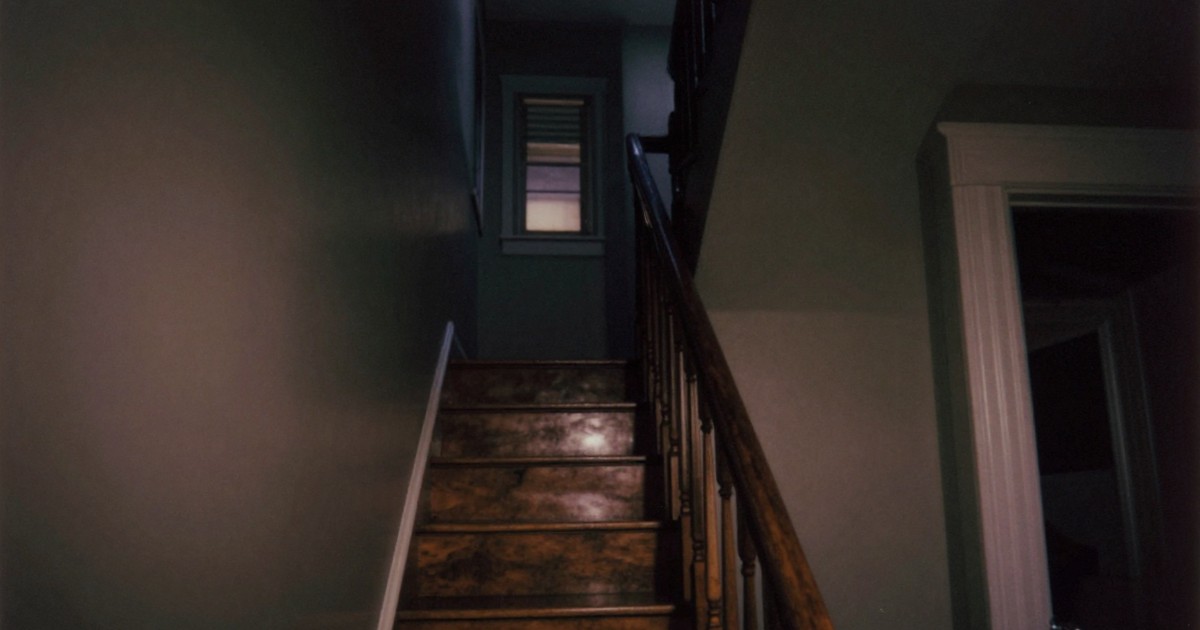
A staircase leads toward an uncertain destination. A dark hallway no longer feels welcoming. A room that was ordinary moments earlier becomes a source of questions.
These are psychological possibilities suggested by the film’s premise, rather than claims about additional scenes.
They help explain why the idea of an unseen intruder can be so unsettling.
The threat does not need to reveal itself immediately.
Sometimes simply believing that another presence might be nearby is enough to create fear.
Thomas Faces an Unseen Threat
Samuele Toldo portrays Thomas, the central character in Never Left.
According to an independent review published by Grave Noise, Thomas finds himself in a nightmare scenario when something makes a noise upstairs while he is alone.
The setup invites a disturbing question: how should someone react when they believe an unknown presence may be inside their home?
Ignoring the sound might seem safer than investigating it.
But uncertainty can become almost as difficult to endure as the possible danger itself.
The longer the source remains unexplained, the more frightening the situation can feel.
The film builds on this tension through a compact horror scenario centered on Thomas and his immediate surroundings.
Its brief format makes the central experience especially important.
Rather than requiring an elaborate fictional history, the story relies on a situation viewers can understand without lengthy exposition.
Someone hears a noise.
Something may be inside.
And suddenly, being alone does not feel so certain.
Sound Design Helps Build the Suspense
In horror filmmaking, sound can be just as important as anything visible on screen.
A strange noise can suggest movement without revealing what caused it.
A sudden change in volume can interrupt a moment of calm. Silence can make viewers pay closer attention to the next disturbance.
These techniques are particularly useful in stories involving unseen threats.
Grave Noise’s review specifically praises the sound design of Never Left, identifying it as one of the film’s strengths.
The review also highlights the short’s use of jump scares and an effective visual moment near the ending.
That assessment suggests the filmmakers were interested in delivering a concentrated horror experience rather than a slow, extended mystery.
For audiences who enjoy brief supernatural or home-based horror, the combination of unexpected sounds and visual surprises can create an intense viewing experience.
Of course, the effect of any jump scare depends on the viewer.
Some people find sudden surprises particularly frightening. Others prefer horror that develops through atmosphere and uncertainty.
Never Left combines the familiar fear of a nighttime disturbance with techniques designed to deliver quick moments of shock.
Who Made Never Left?
Never Left is directed by Luca Zanlorenzi.
The film stars Samuele Toldo as Thomas, the man at the center of the frightening nighttime experience.
An independent review published by Grave Noise on June 15, 2025, discusses the film and describes its running time as less than six minutes.
The review praises its production quality, sound design, jump scares, and final visual effect.
It also observes that the premise is familiar rather than revolutionary, while considering the overall experience enjoyable.
These details help distinguish Zanlorenzi’s Never Left from other horror films with similar names.
For example, He Never Left is a separate feature-length horror film directed by James Morris, while It Never Left is another short film directed by Claire Patterson.
Those productions have different filmmakers, performers, and storylines.
The film discussed here is specifically the short featuring Thomas, played by Samuele Toldo.
Why Home-Based Horror Feels Personal
Horror involving an unfamiliar presence inside a house can feel especially disturbing because viewers already understand the setting.
There is no need to explain why someone might be afraid of an intruder.
The possibility is frightening on its own.
But a story can make that fear even stronger by withholding information.
When a person hears an unexpected sound, the mind begins searching for an explanation.
That process often involves imagining possibilities before gathering enough evidence to know what has happened.
Horror filmmakers can use that uncertainty to draw viewers into the character’s experience.
The audience listens carefully, watches the background, and anticipates what might happen next.
In a short film, these reactions can become the foundation of the entire experience.
Never Left uses a recognizable nighttime scenario to create that sense of anticipation.
And because the danger begins in a familiar environment, the premise can linger in the imagination after the film ends.
Why Never Left Is Worth Discovering
Never Left offers a compact example of how a horror film can build suspense around an ordinary situation.
Its central concept does not require complicated mythology or elaborate world-building.
Thomas is home alone when a disturbing sound makes him question whether he is truly the only person inside.
That single situation creates enough uncertainty to support a short horror experience.
With less than six minutes to tell its story, the film focuses on immediate tension and fright.
The independent review’s positive comments about sound design and jump scares also make it an interesting choice for viewers who appreciate filmmaking techniques that create fear quickly.
For fans of horror shorts, the most memorable idea may be the simplest one.
Your home is supposed to be the place where you can close the door and leave the world’s dangers outside.
But what happens when the sound you fear is already coming from inside?
Sometimes the most frightening possibility is not that something has just entered your home.
It is that you may never have been alone in the first place.
If you heard footsteps or a strange noise upstairs while home alone at night, would you investigate or leave the house immediately?