Top photo: Tupperware Corporation / Public Domain, via Wikimedia Commons
Remember opening up the kitchen cabinet back in 1968, only to have a avalanche of pastel pastel-colored plastic bowls rain down on your linoleum floor? If you ever spent ten minutes frantically searching for a round, sheer lid to fit a square pastel container while your roast beef got cold, you were living through the golden age of Tupperware. Every single home had a collection, usually taking up at least one entire over-stuffed cupboard!
The Magic of the “Burp”
It all started back in 1942 when a chemist named Earl Tupper took leftover polyethylene plastic and shaped it into a bell-shaped container. By 1946, he brought these food-safe, airtight wonders to the public. But there was just one little problem: shoppers in department stores didn’t understand how the flexible lids worked.
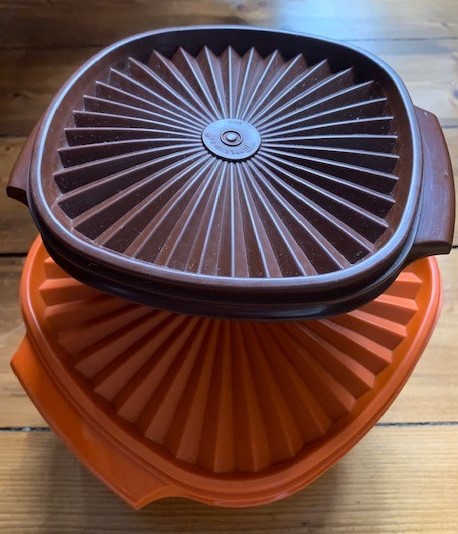
You couldn’t just snap it on and walk away. To get that famous airtight seal, you had to fit the lid on top, press down right in the center, and pull up slightly on the edge to let out a little puff of air. That sound became famous across America as the “Tupperware burp.” Once you heard that little whisper of escaping air, you knew your leftover tuna casserole was safe for another week!
“Carrot Calling” and Living Room Parties
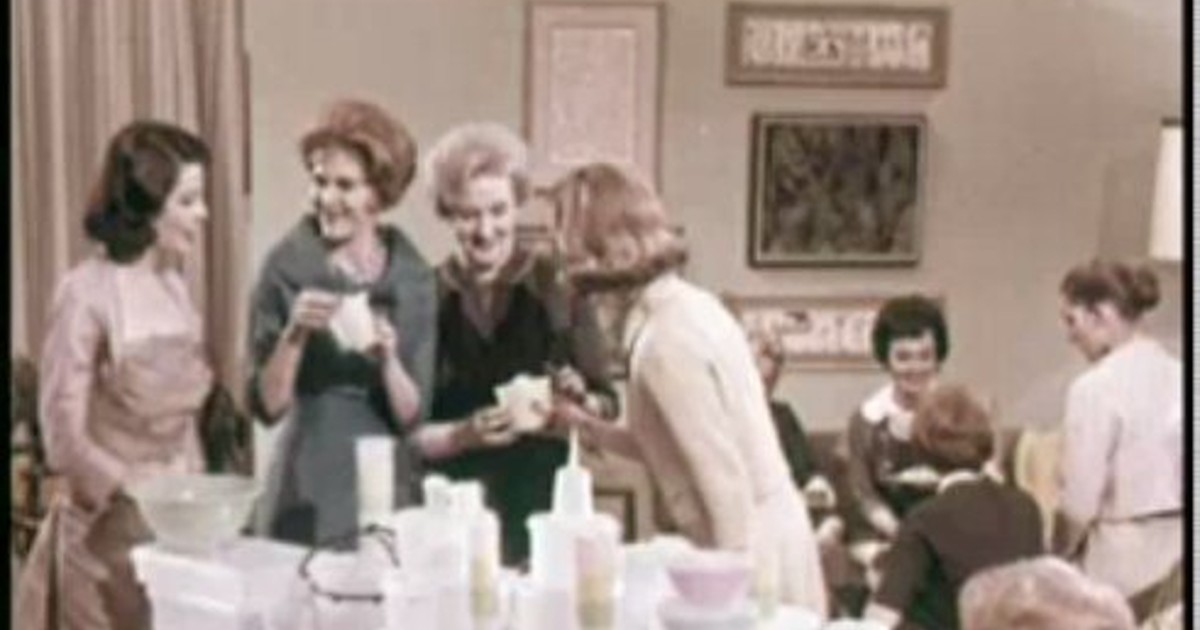
Because retail store shelves just weren’t explaining the burp properly, a brilliant woman named Brownie Wise stepped in. She had been a sales representative for Stanley Home Products and realized these amazing containers needed a hands-on demonstration. In 1951, she was made vice president of marketing, and the legendary Tupperware party took off like wildfire!
To get women interested, representatives even went door-to-door using a cheeky technique called “carrot calling.” A saleswoman would pop by the neighborhood and ask local housewives to compare carrots kept in a Tupperware container against carrots left in their usual kitchen wrapping. Naturally, the Tupperware carrots were crisp, fresh, and ready for action. Before you knew it, a living room party was booked on the spot!
For millions of women in the 1950s and 60s, hosting or attending a party was the ultimate social event. You invited your friends, neighbors, and cousins over for coffee, baked goods, and a full demonstration of plastic kitchenware. It allowed women of that era to earn their very own independent income without taking on a regular 9-to-5 job. Top-selling hostesses and saleswomen were even celebrated with awards in a monthly company magazine called Tupperware Sparks.
Global Empire and Kitchen Cupboard Royalty
By 1960, the trend crossed the ocean to Europe, starting with parties in Weybridge, England. Over the decades, Tupperware expanded into over 80 countries. By 2013, the top market in the entire world for these plastic wonders wasn’t America or Germany—it was Indonesia, where sales topped a whopping $200 million in a single year!
Back home, our mothers and grandmothers accumulated decades of classic pieces. We had the iconic pastel bowls, the pickle poppers, the deviled egg carriers, and those sturdy marinating containers with the grid patterns on the bottom. If you brought potato salad to a Fourth of July picnic, you made sure your name was written on the bottom of your dish in permanent marker, because nobody was leaving their precious container behind!
What Ever Happened to Our Favorite Containers?
Times changed, and so did the way we shop. Over the years, the brand moved through different corporate owners. In 1977, Rexall (the drug store owner) sold off its namesake stores and eventually created Dart & Kraft, leading to various spin-offs over the decades.
In recent times, the famous party model faced big hurdles. Attempts were made to sell products in Target stores in the US and Superstores in Canada, but results were disappointing. In 2024, the last remaining US manufacturing plant in Hemingway, South Carolina was slated for closure, shifting production to Mexico. After experiencing financial struggles and sliding stock prices, parent company Tupperware Brands Corp. filed for Chapter 11 bankruptcy protection in September 2024. But don’t worry, the brand isn’t gone forever! In November 2024, a group called Party Products LLC acquired the brand name to keep the operations running.
Even as life moved on to modern gadgets and online ordering, those classic 1960s and 70s plastic bowls remain permanent icons of our childhood kitchens. Earl Tupper’s original papers and Brownie Wise’s records are even preserved in the Smithsonian’s National Museum of American History!
Which famous Tupperware piece did your family use the most? Did your mother have the famous deviled egg carrier, or are you still hunting for that one missing lid in your cabinet? Tell us all your fun kitchen memories in the comments below!