Top photo: Roy Rose / Public domain, via Wikimedia Commons
Most crimes end with an answer. This one ended with an open door at the back of an airplane, somewhere over the dark woods of the Pacific Northwest. More than fifty years later, nobody knows for sure who went out of it, or what became of him.
A Quiet Man With a $20 Ticket
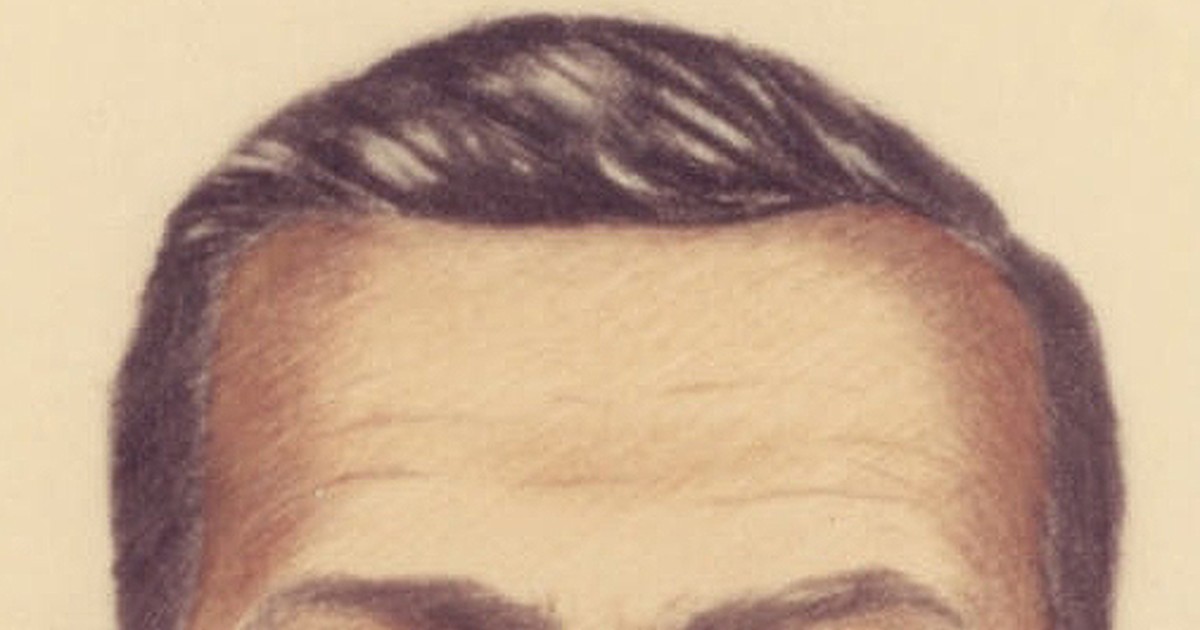
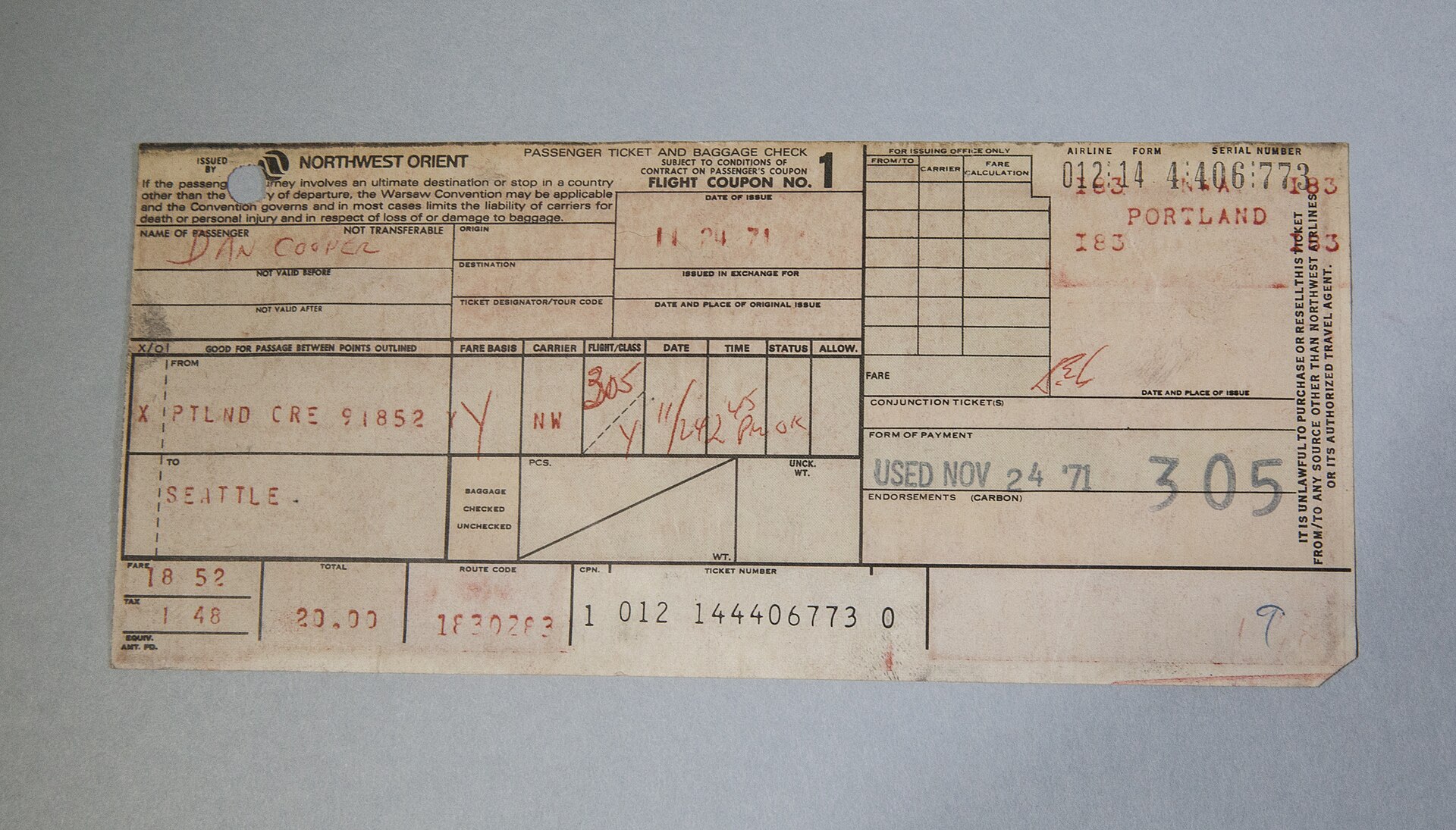
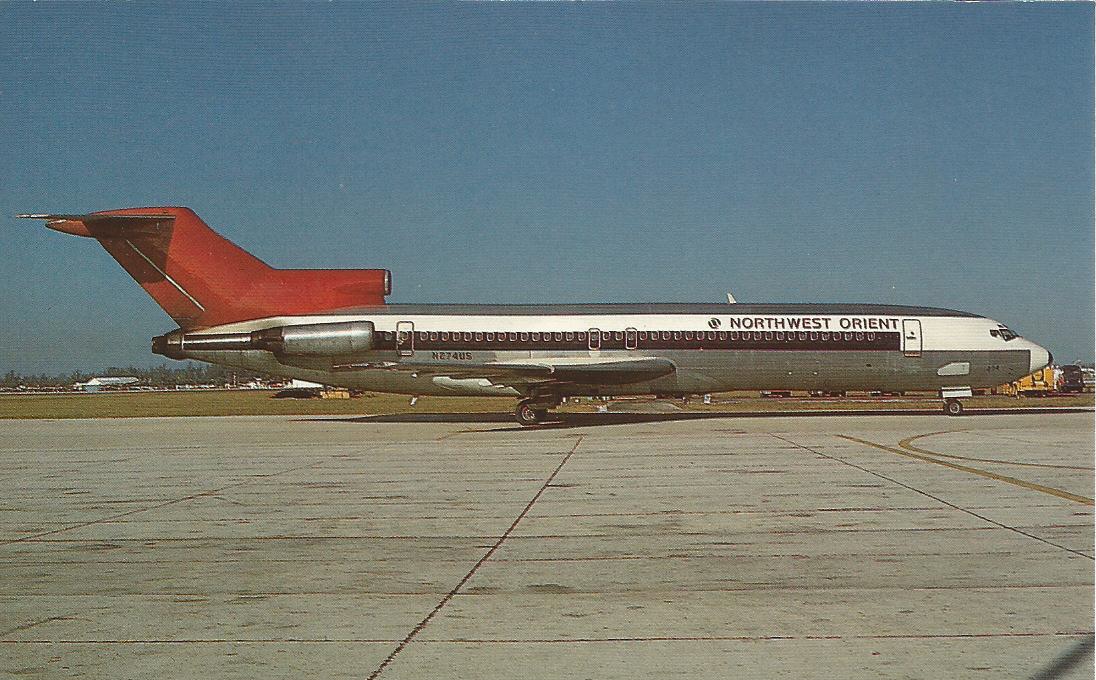
It was November 24, 1971, the night before Thanksgiving. At Portland’s airport, a quiet man in a dark suit and tie bought a one-way ticket on Northwest Orient Flight 305, a short hop to Seattle. The ticket cost about $20. He gave his name as Dan Cooper. He looked to be in his mid-forties, around six feet tall, and nobody gave him a second glance.
Shortly after take-off, he handed a note to flight attendant Florence Schaffner. She assumed it was a lonely businessman passing her his phone number and put it away. He leaned over and told her to read it. The note said he had a bomb.
He showed her the inside of his briefcase, wires and red sticks included, and calmly listed his demands: $200,000, four parachutes, and a fuel truck waiting in Seattle.
The Name That Was a Mistake
That famous name, “D.B. Cooper,” was never his. He called himself Dan Cooper. A reporter rushing to cover the story got it wrong, other newspapers copied it, and the mistake has stuck ever since.
A Calm Hijacker
For a hijacker, he was strangely polite. Flight attendant Tina Mucklow stayed at his side and carried his messages to the cockpit. The plane circled while the money and parachutes were gathered, and when it landed at Seattle-Tacoma, Cooper let the passengers and two of the flight attendants go. The FBI had quietly recorded the serial numbers of the ransom bills.
Then the plane took off again with only Cooper, Tina Mucklow and the flight crew aboard. He ordered a course toward Mexico City, with a refuelling stop in Reno, Nevada. He told the pilots to fly low and slow, and to keep the back stairway of the Boeing 727 lowered.
Into the Dark
Somewhere over southwest Washington, at around 8:13 that night, the crew felt the tail of the plane bump upward. When the jet landed in Reno just after 11 p.m., they searched the cabin. Cooper was gone. So were the money and two of the parachutes. Investigators believe he jumped out of the open rear stairway into a cold, rainy night over rough country.
The Boy on the Riverbank
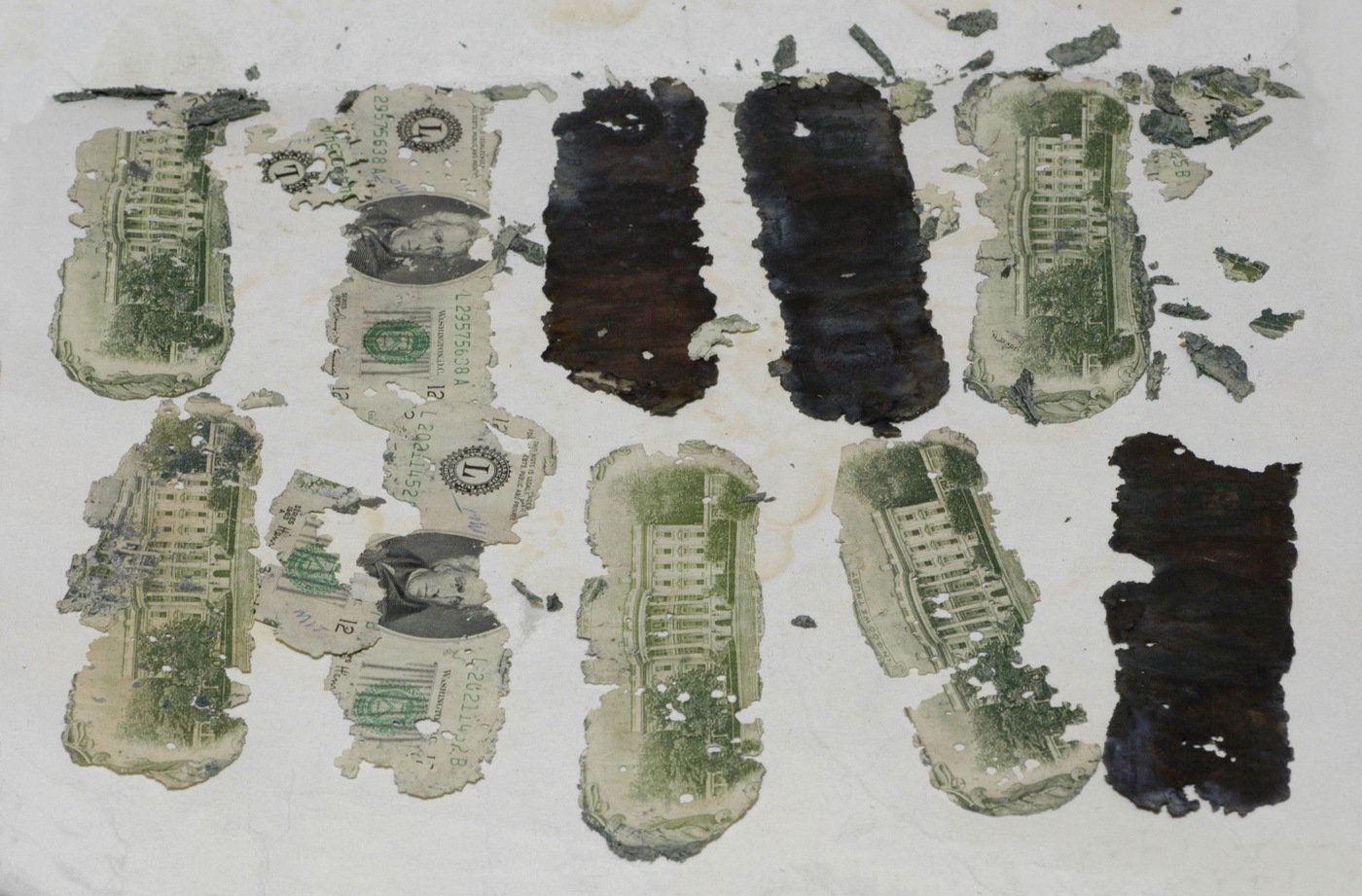
The case went cold for years. Then, in February 1980, an eight-year-old boy named Brian Ingram was on a family outing along the Columbia River at a spot called Tena Bar. Digging in the sand, he found bundles of old, rotted $20 bills. The serial numbers matched. It was almost $6,000 of Cooper’s ransom money. To this day it is the only part of the money ever found, and nobody has been able to explain for certain how it got there.
The Case That Never Closed
For 45 years the FBI followed hundreds of tips and checked many suspects. Agents found a black clip-on tie he left on the plane, with a mother-of-pearl tie clip. Many investigators came to believe he probably did not survive the jump, given the weather, the darkness and the land below. But no body was ever found.
In July 2016, the FBI announced it was ending its active investigation and moving its resources to other cases. The mystery of D.B. Cooper remains officially unsolved.
A Legend Is Born
Over the years D.B. Cooper became something more than a criminal. He turned into a folk legend, with books, songs and an annual gathering of fans in the Northwest. But it is worth remembering the people on board that night, especially the young flight attendants who stayed calm and kept everyone safe.
Do you remember hearing about the hijacking in 1971? What do you think happened to the man who jumped? Tell us your theory in the comments.
Sources
- Wikipedia: D. B. Cooper
- FBI: D.B. Cooper Hijacking
- FBI: A Byte Out of History – D.B. Cooper
- Britannica: D.B. Cooper