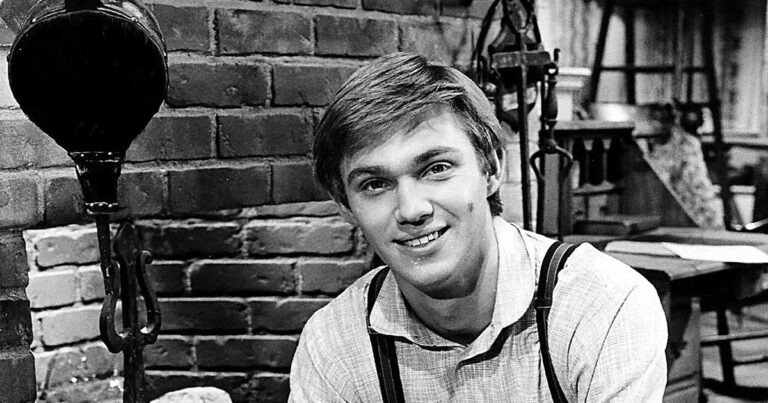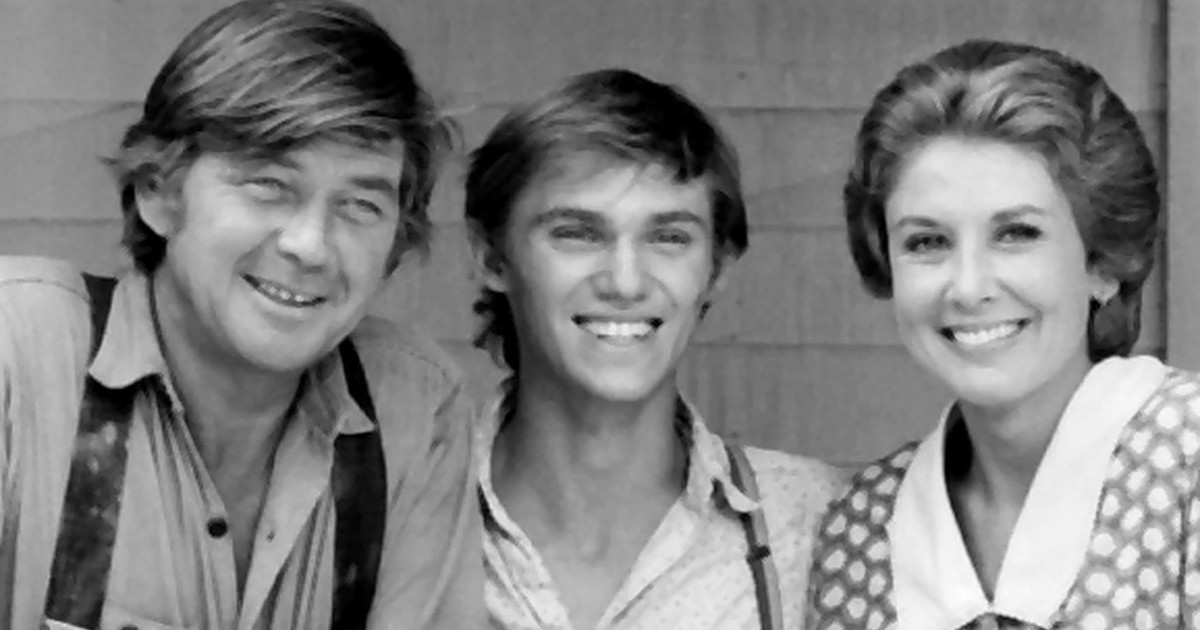
Top photo: CBS Television / Public domain, via Wikimedia Commons
For John-Boy Walton, writing is more than a hobby. He reads whenever he can, fills his journal with observations, and dreams about a future spent telling stories. But life on Walton’s Mountain requires him to contribute to the family’s work, too.
That conflict is at the heart of The Literary Man, Season 1, Episode 11 of The Waltons, which originally aired on CBS on November 30, 1972.
When a traveling storyteller named A.J. Covington enters John-Boy’s life, the aspiring author finds someone who appears to understand his ambition. Their friendship, however, takes time away from an important timber order. A family medical emergency soon adds to the pressure.
A Chance Meeting on the Road
John-Boy is reading Moby-Dick when his father assigns him a delivery of railroad ties to Rockfish. The family needs the work completed, and John-Boy sets off in the truck.
His journey is interrupted when the vehicle breaks down. A passerby, A.J. Covington, stops to help. During their conversation, John-Boy discovers that the stranger describes himself as a writer and has stories about travel and literary figures.
John-Boy, who knows most authors through the printed page, is fascinated to meet someone associated with that world. He invites Covington to the family home, eager to hear more.
A Writer Visits Walton’s Mountain
Covington makes an impression on the Waltons with his stories and easy conversation. He also says he has experience with lumber work. Since the family needs help fulfilling an important timber order, an arrangement is made for him to work in exchange for room and board.
The plan appears promising. John gains an extra pair of hands, the traveler gets a place to stay, and John-Boy has an unusual opportunity to discuss writing with someone who shares his interests.
But the very thing John-Boy finds most exciting about the arrangement begins to interfere with the work he is supposed to do.
A Writing Lesson Takes Too Much Time
John-Boy and Covington go into the mountains to gather timber. During a break, John-Boy asks his new acquaintance to read something from his journal.
Covington offers advice on making the writing clearer. He suggests reducing unnecessary adjectives rather than relying on decorative language to make every sentence impressive. The two begin editing together.
For John-Boy, the lesson is valuable. He is receiving serious feedback on an ambition that matters deeply to him. But he and Covington spend so long working on the journal that they return with less timber than expected.
John is disappointed. The family needs the order completed, and the men at home are depending on the timber being delivered. He reminds his son that accepting a responsibility means giving the work his full effort.
Ambition Meets Family Responsibility
John-Boy feels torn. Covington’s stories have made the life of a writer sound exciting, but his father has shown him the cost of neglecting an ordinary obligation.
The young man begins to wonder whether becoming a writer means putting distance between himself and the people he loves. He wants to learn from the traveler, yet he also knows that his family cannot ignore its financial responsibilities.
As the Waltons struggle to keep the timber order on schedule, John-Boy becomes increasingly aware of the consequences of lost work time. The family’s hopes of completing the contract are ultimately disappointed.
Jim-Bob Needs Urgent Medical Help
Another problem develops when Jim-Bob suffers severe abdominal pain. His condition worries the family.
Covington has experience working in a hospital, though he is not a physician. Recognizing symptoms that may indicate appendicitis, he urges the Waltons to seek medical treatment promptly.
Jim-Bob is taken to the hospital, where his appendix is removed. The family is relieved when they learn the surgery has been successful.
The emergency demonstrates that Covington’s visit cannot be judged by the lost work alone. Despite his shortcomings, his quick recognition of the boy’s condition helps the family respond to a serious illness.
Even so, the surgery creates another financial burden. The hospital expense is twenty-two dollars, a meaningful amount for a family already worried about income.
The Literary Man’s Own Unfinished Ambition
John-Boy has admired Covington’s stories of the literary world. Yet the visitor eventually admits that his life has not produced the writing he once hoped to complete.
He has spent years gathering experiences, discussing them, and searching for the right subject. Too often, telling a story to other people has taken the place of sitting down to write it.
This admission changes John-Boy’s understanding of the older man. Covington has useful knowledge and real experiences, but his colorful reputation does not automatically make him a productive author.
The lesson is not that traveling or meeting interesting people has no value. It is that writing requires the discipline to put experiences into words.
The Stories John-Boy Already Knows
Covington encourages John-Boy to consider the lives unfolding all around him. His family, neighbors, and community have their own joys, conflicts, and hardships.
The young writer does not need to leave Walton’s Mountain before finding something worth recording. Small moments can become meaningful stories when described with care.
This is a different vision of the literary life from the one John-Boy imagined when he first met the visitor. It does not require choosing between his family and his writing. His family experiences may become the very material that makes his writing distinctive.
A Note and Twenty-Two Dollars
Covington eventually decides to continue traveling. Before leaving, he writes John-Boy a note and leaves twenty-two dollars for the family.
His message describes the money as a loan, not a gift. The amount is also the same as Jim-Bob’s surgery bill.
The gesture does not erase every difficulty caused during his visit. But it shows that Covington understands the family’s situation and wants to help in a practical way.
For John-Boy, the more lasting gift is the realization that the ordinary events of Walton’s Mountain deserve to be written down.
Cast and Creative Team
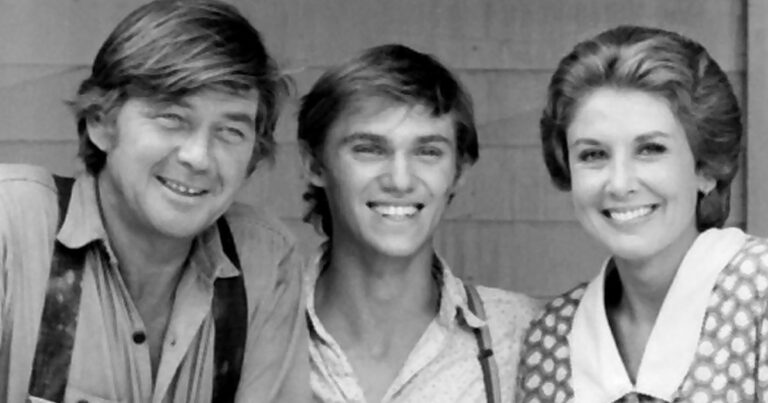
Richard Thomas portrays John-Boy Walton, with Ralph Waite as John Walton and Michael Learned as Olivia Walton. David Huddleston guest stars as A.J. Covington, while David W. Harper plays Jim-Bob.
The Literary Man was directed by Philip Leacock. The specialist episode guide All About the Waltons lists the writer as Colley Kibber; some other databases use a different spelling, so this article follows that guide’s credit.
Why The Literary Man Matters
The Literary Man contrasts a young man’s excitement about artistic success with the daily obligations of a family living through difficult times.
John-Boy learns that talent and enthusiasm are not enough. He needs discipline in both his writing and his work. Covington, meanwhile, recognizes that a lifetime of fascinating experiences can remain unfinished if he never commits them to the page.
Jim-Bob’s illness gives the family’s worries another dimension, while Covington’s final note offers a modest gesture of care.
By the end, John-Boy has a clearer idea of what he can write about. Instead of searching for the one great story far from home, he can begin with the people and experiences he knows best.
Do you remember The Literary Man? Did Covington’s advice help John-Boy, even though the visit complicated the family’s work?