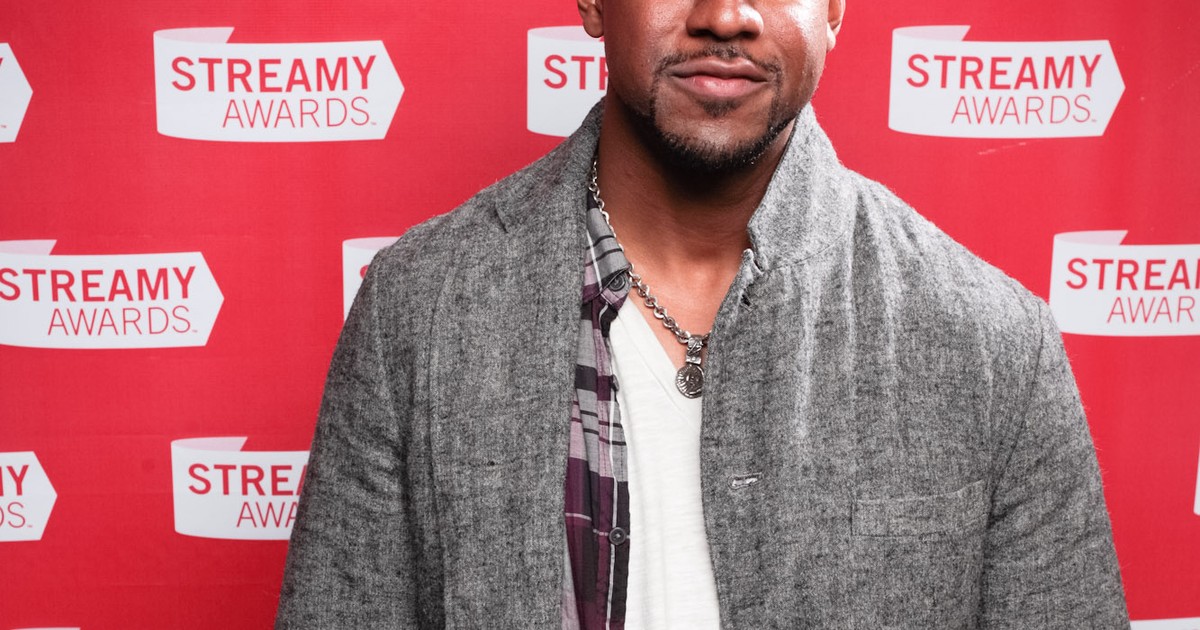
Top photo: The Bui Brothers / CC BY 2.0, via Wikimedia Commons
If you were anywhere near a television on a Friday night in the early 1990s, you knew the sound of it: a bouncing theme song, a Chicago living room, and a door swinging open to reveal a skinny kid in suspenders and glasses who had absolutely not been invited. Family Matters began as a modest spin-off and turned into something nobody at the network planned for — a show that a single character swallowed whole. Here’s how it happened, from the first elevator ride to the final sign-off.
It Started in an Elevator
Before there was a Winslow family, there was Harriette Winslow, an elevator operator at the offices of the Chicago Chronicle on Perfect Strangers. The character, played by Jo Marie Payton, worked the same building as Larry Appleton and Balki Bartokomous, and she was funny and quick in a way that stuck with people.
Reginald VelJohnson, who was riding a wave of new attention after Die Hard, appeared on that show as Harriette’s husband, Carl, a Chicago police officer. ABC and the producers liked what they saw in Harriette — her good cheer, her sharp tongue — and decided she deserved a household of her own.
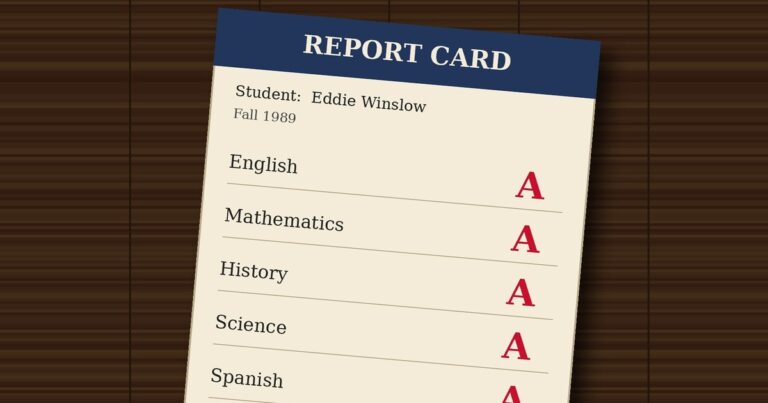
That household arrived on September 22, 1989, with a pilot called “The Mama Who Came to Dinner.” Created by William Bickley and Michael Warren and developed by Thomas L. Miller and Robert L. Boyett, the series centered on a Black middle-class family in Chicago: Carl and Harriette, their son Eddie, older daughter Laura, and younger daughter Judy.
A Family, Assembled
The house was crowded from the start, and that was part of the charm. Carl’s street-smart mother, Estelle — everyone called her Mother Winslow — lived with them, played by Rosetta LeNoire. Harriette’s sister Rachel Crawford and her infant son Richie had moved in before the series began, after Rachel’s husband died. Telma Hopkins played Rachel; young Richie was eventually played by Bryton James.
It was a full, noisy, recognizable home — the kind of place where the kitchen table carried three conversations at once. The show filmed in front of a live studio audience, originally at Lorimar Studios in Culver City (later Sony Pictures Studios), and later at Warner Bros. Studios in Burbank once Warner Bros. absorbed Lorimar in 1993.
Even the music changed. The first episodes used Louis Armstrong’s “What a Wonderful World,” which was dropped after the fifth episode of season one. What replaced it was “As Days Go By,” written by Jesse Frederick, Bennett Salvay and Scott Roeme and performed by Frederick. If you can hum it right now, you’re not alone.
Enter the Neighbor
Midway through the first season, in an episode called “Laura’s First Date,” the show brought in a nerdy neighbor kid named Steve Urkel, played by Jaleel White. The part was written as a one-time appearance. It did not stay one time.
Urkel became the breakout character practically overnight, and soon enough he was a series regular rather than a guest. The Winslows’ front door became the most abused prop on television. And the show’s center of gravity shifted — more and more plots came to rest on Steve.
White didn’t just play Steve. Over the years he added Steve’s suave alter ego, Stefan Urquelle, and Steve’s female cousin, Myrtle Urkel. One actor, three very different sets of eyeglasses.
The Peak Years
Through the late ’80s and into the ’90s, Family Matters was a fixture of ABC’s Friday-night “TGIF” lineup, the same family-friendly block that carried Perfect Strangers and other comfort-watch comedies. It sat there from 1989 until 1997.
Being a TGIF show meant something in that era. Friday was pizza night, laundry night, everybody-home night, and the TV was on. Family Matters fit that slot perfectly — broad, warm, and just silly enough to make a whole room laugh at once.
The show was also part of a shared television universe. Characters crossed over to and from Full House, Boy Meets World, Step by Step and Meego, so a loyal viewer could follow a familiar face from one sitcom to the next.
Behind the scenes, the production team grew along with the show: Bickley-Warren Productions joined starting with season three, alongside Miller-Boyett Productions, with Lorimar and then Warner Bros. Television.
A New Network, and a Hard Goodbye
By early 1997, the party was moving. CBS struck a $40 million deal to pick up Family Matters and Step by Step from ABC, and ABC countered by offering Miller-Boyett Productions $1.5 million per episode for a ninth and tenth season. But relations between the producers and ABC’s parent, The Walt Disney Company, had frayed after Disney bought the network in 1996. Miller-Boyett doubted it would be a major player there.
So the show took the CBS offer — a 22-episode season — and became part of a new Friday lineup called the CBS Block Party, scheduled directly against the TGIF block where it had been born.
The move came with a painful transition. Jo Marie Payton’s contract had expired, and she was reluctant to return, feeling the show had jumped the shark years earlier. She agreed to stay for continuity, but left midseason, shortly after a dispute with White that nearly turned physical — a disagreement over material in an episode where White played a gangster rather than Urkel, and which ran into Broadcast Standards and Practices. Darius McCrary stepped in to separate them. Payton appeared once more, in a Christmas episode that brought back several former characters, and then Judyann Elder took over the role of Harriette for the rest of the season.
Ratings told their own story. The show was a modest success at first on CBS, beating You Wish, the series that replaced it at ABC. But Meego flopped and was gone in six weeks. CBS then moved Kids Say the Darndest Things into the 8/7c slot and pushed Family Matters an hour later. Viewership fell further. In spring 1998 the block was canceled, apart from Kids Say the Darndest Things, and the last episodes were burned off over the summer. The show signed off on July 17, 1998.
What It Left Behind
Nine seasons. 215 episodes. That run makes Family Matters the third-longest-running live-action American sitcom with a predominantly African-American cast, behind The Jeffersons (253 episodes across 11 seasons) and Tyler Perry’s House of Payne (400 episodes as of 2026).
It also holds a quieter distinction: it was the last live-action scripted primetime show that debuted in the 1980s to end its run. Only The Simpsons and The Bold and the Beautiful, both of which started in that decade, have lasted longer in continuous production.
Reruns kept the Winslows around long after the final episode — on TBS, WGN America, ABC Family, Nick at Nite, BET, TV One and elsewhere, and later on streaming. On October 1, 2021, the series began streaming on HBO Max after its rights expired from Hulu, though it has since returned to Hulu; it left HBO Max in September 2025. A complete-series DVD box set arrived on September 26, 2023.
Urkel himself has popped back up more than once. Jaleel White voiced the character again in a 2019 episode of Scooby-Doo and Guess Who? — the first time he had officially played Steve in a television production since 1998. An animated holiday film, Urkel Saves Santa: The Movie!, was announced in 2021, dropped by HBO Max in 2022, and finally released digitally on November 21, 2023. A proposed Netflix reboot in 2016, with Steve and Laura raising a son named Steve Jr., never happened; White pitched a different single-camera show instead, and that one didn’t get made either.
The Door Still Swings Open
What made Family Matters last wasn’t the plot machinery. It was the ritual of it — a family on a couch, a neighbor at the door, and a Friday night when nobody had anywhere better to be. The Winslows were ordinary people who kept showing up for each other, and for a while, we kept showing up for them.
Were you a TGIF household? Did you have a favorite Urkel invention, or a soft spot for the earlier, quieter seasons? Tell us in the comments which episode you still think about.