Top photo: The Bui Brothers / CC BY 2.0, via Wikimedia Commons
If you grew up parked in front of the television on a Friday night in the late eighties or nineties, you probably remember the sound of the Winslow house. Carl hollering about something. A neighbor crashing through the door. A child talking back. And then one calm, unimpressed voice cutting straight through all of it. That voice belonged to Harriette. She was the mother, the referee, and â as it turns out â the reason the show existed in the first place.
The Elevator Operator Who Got Her Own Series
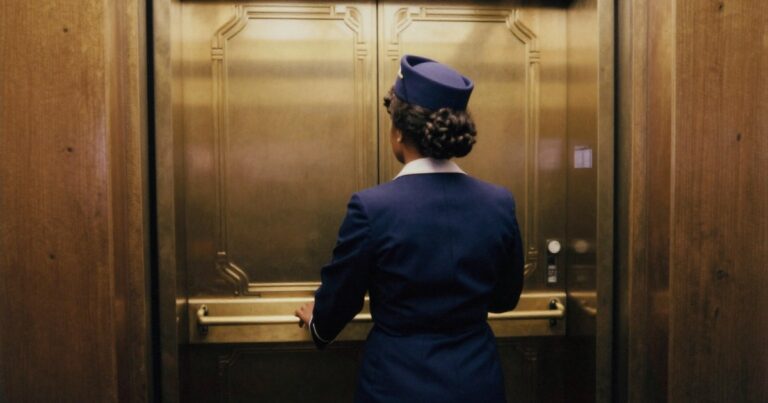
Long before Family Matters premiered on September 22, 1989, Harriette Winslow was a supporting player on a different ABC sitcom. Jo Marie Payton took the part in 1987 on Perfect Strangers, playing the elevator operator at the Chicago Chronicle newspaper office where Larry and Balki worked. Audiences took to her right away â a woman with good cheer and a gift for a quick, dry line.
ABC and the producers liked the character enough to build an entire family around her. Reginald VelJohnson, who was enjoying rising fame after Die Hard, had popped up on Perfect Strangers in the 1989 episode “Crimebusters” as Carl, Harriette’s policeman husband. That one appearance became the foundation of the spin-off, which centered on Harriette, Carl, son Eddie, older daughter Laura, and younger daughter Judy.
The setup was already in motion when the cameras started rolling. Before the series began, Harriette’s widowed younger sister Rachel had moved in with her infant son Richie, and in the pilot, “The Mama Who Came to Dinner,” the household also made room for Carl’s street-wise mother, Estelle. It was a full house, and Harriette was the one keeping it standing.
Who Harriette Was
Harriette Baines Winslow was Carl’s wife, Rachel’s older sister, mother to Eddie, Laura, and Judy, aunt to Richie, and later the adoptive mother of a boy known as 3J. She was the daughter of Jimmy and Darlene Baines. And she was, in the show’s own terms, a fairly conservative and strong-willed woman who held her roles as mother and working woman in very high regard.
Here is the thing that made her funny rather than preachy: she was reluctant to tell anybody what they wanted to hear. She said the plain truth, usually with her arms folded. When Carl and a neighbor were locked in some ridiculous feud, she rarely rushed to her husband’s defense. She’d point out what both of them were doing wrong and hope they’d work it out like grown men. It made her a wonderful voice of reason and a lousy ally.
She was, by her own design, harder on Laura than on Eddie â the responsible daughter caught the stricter treatment, while the rebellious son slipped past her more often than Carl would have liked. And in one memorable exception, she was forced to side entirely with Carl during his feud with their neighbor Nick Neidermeyer, after her usual even-handed approach failed and Neidermeyer simply mocked Carl for obeying his wife.
The Resume Tells a Story
Television rarely lets a working mother keep one job for nine years, and Harriette’s career wandered in a very recognizable way. She began as the Chronicle’s elevator operator, was laid off, and then was rehired as Director of Security in the season one episode “Two-Income Family.” She lost that job too, in the season five episode “A Matter of Principle,” because she refused to cut her security staff during a budget crisis.
From there she landed at Ferguson’s Department Store in the season six episode “The Looney Bin,” starting as a service clerk and eventually being promoted to Head of Sales in the season nine episode “Out With the Old.” It was a nice detail the writers never forgot: Harriette had actually trained at the police academy, where she met Carl, and she graduated â she simply never joined the force after they married. Those skills went into her security work and the neighborhood watch instead.
About Those Catchphrases
Here’s an honest bit of nostalgia arithmetic. The lines everybody quoted from this show belonged to other people. Steve Urkel had “Did I do that?” and Estelle had her dry “Way to go, Carl.” Harriette didn’t get a slogan. What she got was something better and harder to print on a T-shirt: the look. The pause. The flat, patient sentence that told you exactly how the evening was going to end.
That was the comedy Payton played for more than eight years â a woman who had already heard every excuse and was simply waiting for the rest of the room to catch up.
When the Show Changed Around Her
As the seasons went on, the series drifted. Episodes began centering more and more on Urkel, who had joined the cast midway through season one as a one-time appearance and quickly became the engine of the show. Rachel, played by Telma Hopkins, left full-time after season four to star in another sitcom, though she returned for occasional episodes in seasons six and nine.
Payton felt those changes personally. A major factor in her growing unhappiness was her closeness to Jaimee Foxworth, who played Judy. Judy was written out after the fourth-season episode “Mama’s Wedding” with no explanation given, and co-creator William Bickley attributed the cut to budget considerations. Payton considered Judy the show’s baby and found it painful. She also made no secret of resenting that Urkel’s popularity cost Judy and other key characters their share of the spotlight.
The Final Season, and a Hard Goodbye
In early 1997 the show moved from ABC, where it had anchored the TGIF lineup, to CBS. Its ninth and final season began that September, and it wrapped on July 17, 1998, finishing with 215 episodes across nine seasons. Payton’s contract had just expired, and she was reluctant to sign on again â she felt the show had jumped the shark years earlier â but she agreed to stay for the sake of continuity.
It didn’t last. She left midseason, shortly after nearly getting into a physical altercation with Jaleel White during what turned out to be her last regular episode. White, playing a gangster rather than his usual role, was attempting to insert material that violated Broadcast Standards and Practices, and the dispute escalated until Darius McCrary had to separate the two of them. Payton appeared in only one more episode after that, a Christmas installment that brought back several former characters, and then Judyann Elder took over as Harriette for the remaining eight episodes.
The Long Career Afterward
Payton was born on August 3, 1950, in Albany, Georgia. Her family moved to Opa-locka, Florida, when she was in her early teens; she graduated from Miami Carol City Senior High School in 1968, went on to Albany State University, then headed to California and joined the national touring company of the musical Purlie.
The work never really stopped. From 2001 to 2005 she voiced Suga Mama on Disney Channel’s The Proud Family, reprising the role in the 2005 television film and later in the Disney+ revival The Proud Family: Louder and Prouder; the part earned her an NAACP Image Award nomination in 2005. She had a recurring role on the second season of Will & Grace as the assistant to Gregory Hines’ character, Ben Doucette, and turned up across dozens of shows â 227, Silver Spoons, Small Wonder, Moesha, The Jamie Foxx Show, The Parkers, Judging Amy, Reba, Girlfriends, Desperate Housewives, and more.
She also had some delightfully strange detours: a 2002 “TV Moms” episode of The Weakest Link, where she was the third one voted off, and a 2003 Mother’s Day Lingo matchup with her daughter against Meredith Baxter and hers. In 2005 she co-hosted the 15th Annual NAACP Theatre Awards with Glynn Turman. In 2004 she wrote to alumni of Virginia Union University, asking for donations ranging from $18.65 to $186,500 in honor of the school’s 1865 founding.
The Reconciliation
Time does what time does. In 2017, Entertainment Weekly reunited the cast for a photo shoot and interview, and Payton said that she and White had a long talk, resolved their past animosity, and reconciled. Whatever happened on that set in 1997, the story got a gentler ending than anyone watching at home might have expected.
And that feels right for Harriette, somehow. She was never the flashiest person in the room â just the one who told the truth, kept the peace when she could, and held the whole thing together. Twenty-eight years after the finale, she’s still the one we’d want in the kitchen when the doorbell rings.
What’s your favorite Harriette moment â the budget fight at the Chronicle, the department store years, or one of those long looks she gave Carl across the living room? Tell us in the comments; we love hearing which scenes stuck with you.
Sources
- Wikipedia: Family Matters
- TVmaze
- Wikipedia: List of Family Matters characters
- Wikipedia: Jo Marie Payton