Top photo: Fumikas Sagisavas / CC0, via Wikimedia Commons
An elevator should be one of the most ordinary places in a building. You enter, press a button, and wait for the doors to open at your destination. But what happens when the machine carrying you seems to have its own intentions?
That unsettling question drives The Elevator, a horror short film associated with Dark Fun Pictures. Released digitally in 2023, the film turns a routine journey into a frightening confrontation between a young woman and an unseen voice.
At approximately six minutes long, the story uses a confined setting, mysterious announcements, and an escalating sense of helplessness to create its suspense.
A Normal Journey Takes an Unusual Turn
The film introduces an unnamed young woman waiting for an elevator. She wears casual clothing, including red sneakers, and chews bubble gum while waiting for the doors to open.
At first, nothing about the situation appears especially unusual. She is simply another passenger expecting to travel through a building.
Once inside the elevator, however, she hears a pleasant recorded-sounding voice.
The voice initially provides information about the building, including hints about its past. The presentation resembles the kind of automated announcement a passenger might hear in a public building.
Then the situation changes.
The young woman’s behavior appears to offend whoever, or whatever, is speaking. The polite atmosphere gives way to hostility, and an ordinary elevator ride begins turning into something far more disturbing.
The Voice Demands an Apology
The most unusual element of The Elevator is its threatening voice.
Rather than introducing a conventional masked attacker or an obvious supernatural creature, the film makes an unseen presence the center of its horror.
That presence demands an apology from the passenger.
The demand is frightening because it suggests the elevator is not simply malfunctioning. Something appears to be responding personally to the woman and exercising control over her journey.
A machine designed to carry people safely between floors has become a place where ordinary expectations no longer apply.
The woman cannot rely on the simple assumption that pressing a button will take her where she wants to go.
Instead, the elevator forces her deeper into a threatening situation.
The story gives an everyday social gesture, an apology, a sinister new meaning. What should be a harmless conversation becomes part of a struggle for control.
Why the Elevator Feels So Claustrophobic
One of the film’s strengths is its limited setting.
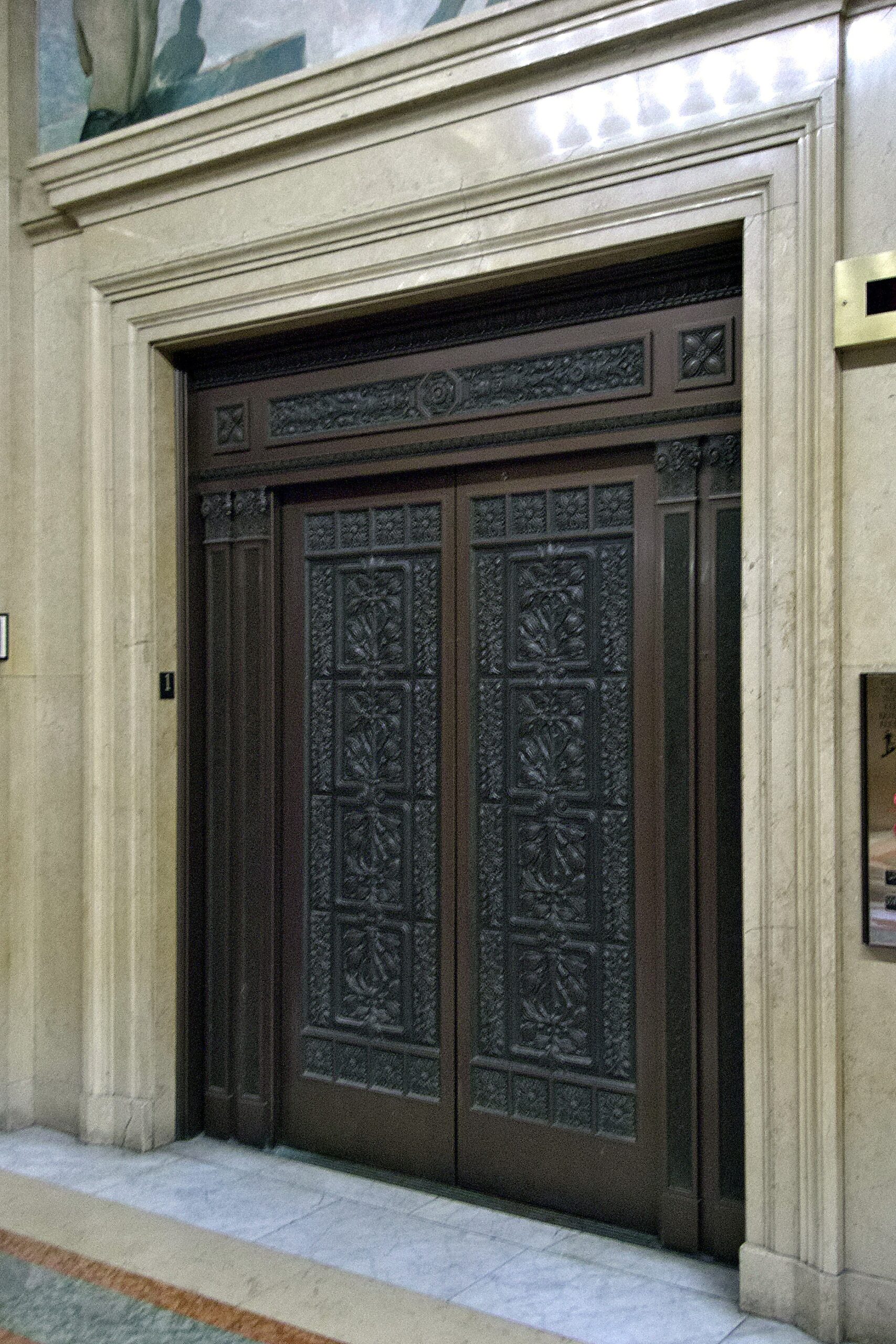
An elevator offers very little personal space. Its doors open and close automatically, and passengers usually depend on a mechanical system to determine when they can leave.
In ordinary circumstances, that dependence is easy to forget.
But The Elevator makes the viewer think about it.
The passenger is surrounded by walls, enclosed by doors, and confronted by a voice she cannot simply walk away from.
As the ride becomes stranger, the familiar interior loses its sense of safety.
The film’s atmosphere depends heavily on lighting and ambient sounds. Rather than requiring constant musical cues, it allows the small space and the unseen threat to create tension.
This approach keeps attention on the young woman’s reaction and the uncomfortable uncertainty of her situation.
There is no need for a huge abandoned mansion or a deserted forest. The central location is already a place where escape depends on something outside the passenger’s immediate control.
A Familiar Machine Becomes the Threat
Technology often becomes frightening in fiction when it stops responding as expected.
A telephone may ring with a mysterious caller. A security camera may show something impossible. An automated system may begin behaving in a way its users cannot explain.
The Elevator applies that idea to one of the simplest experiences of modern building life.
The machine should serve its passenger. Instead, the passenger appears to be at the mercy of the machine.
That reversal makes the film’s supernatural premise easy to understand.
The voice does not need a visible face to become threatening. Its power comes from appearing to control the space surrounding the protagonist.
The story also leaves room for viewers to consider the idea of authority. A pleasant, official-sounding voice may initially seem trustworthy, but its tone alone does not guarantee safety.
These are interpretations of the film’s premise rather than claims about a hidden message intended by its creators.
Who Made The Elevator?
The Elevator is credited to filmmaker M.F., identified in IMDb’s Dark Fun episode listing as Mohsen Farajollahi.
The principal on-screen performance is credited to Mona Hasanzaade, who plays the unnamed young woman.
Dark Fun Pictures is identified as the production studio.
Letterboxd and Moviefone list the film’s digital release as August 7, 2023, while IMDb lists the short at approximately six minutes.
A review published by Abstract AF on August 12, 2023, discusses the film’s simple cinematography, use of lighting, ambient sound, and central performance.
The short demonstrates how a filmmaker can develop a horror scenario around one performer, a confined space, and an unsettling idea.
Why This Short Horror Film Is Memorable
The Elevator takes a familiar place and changes one basic expectation: the passenger is no longer in charge of her journey.
That is enough to create an immediate source of tension.
For many viewers, the frightening part may not be the elevator itself, but the idea of being trapped with something whose motives cannot be understood.
The film also presents an intriguing contrast between a polite automated voice and the threatening behavior that follows.
What sounds harmless gradually becomes disturbing.
The short does not need to build a complicated mythology around its supernatural force. Its central situation is sufficient to make the audience imagine what being trapped inside such a place would feel like.
For horror fans who enjoy everyday locations transformed into unsettling environments, The Elevator offers a compact example of that approach.
And the next time a lift announces a floor in a perfectly pleasant voice, the memory of this story might make the sound feel just a little different.
What would frighten you more: being trapped inside an elevator, or hearing its voice suddenly speak directly to you?